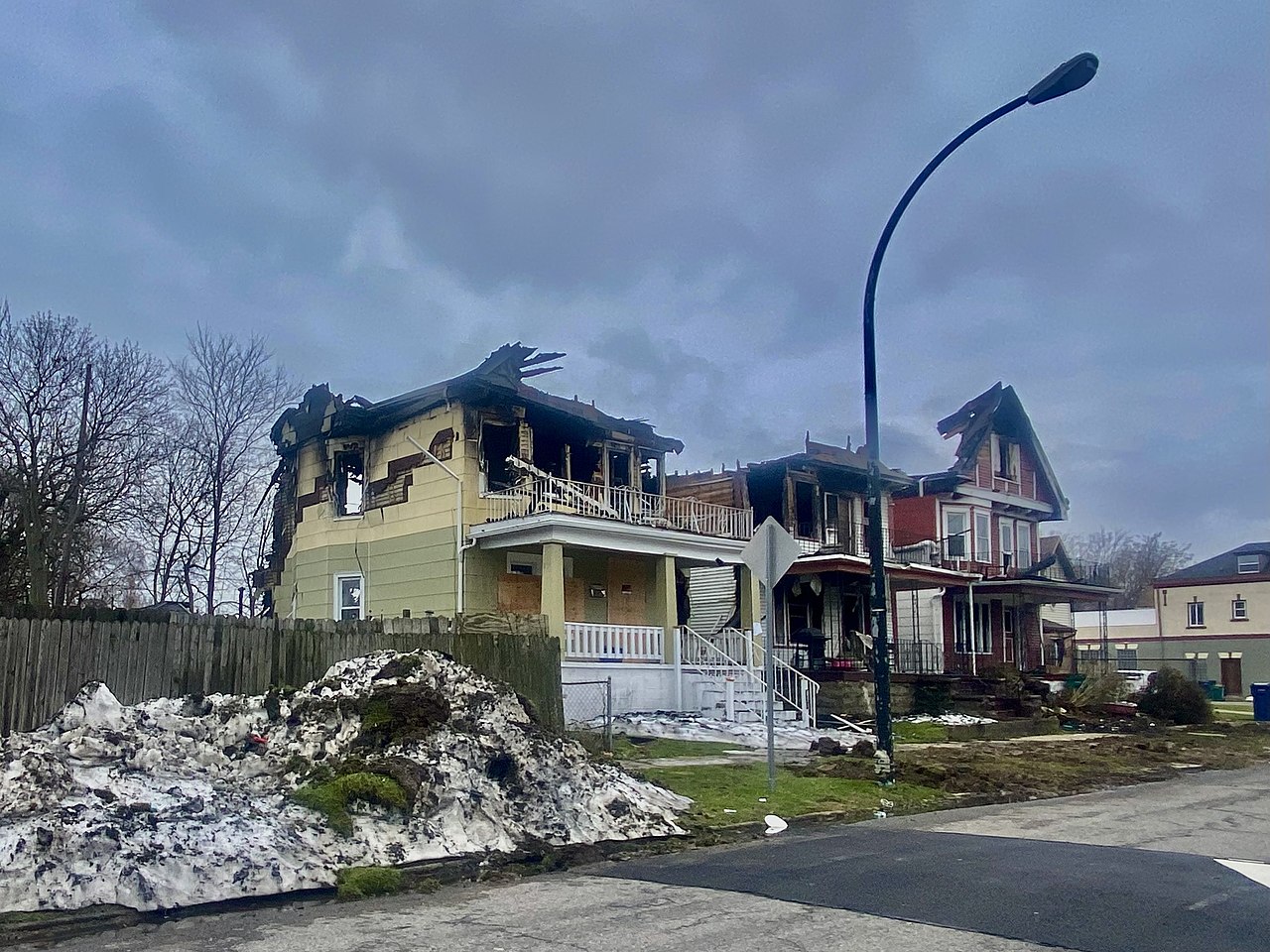
Most of the damage that happens after a fire is done by people trying to help, in the first 72 hours, with the best intentions.
The mistakes are predictable. They cluster around re-entry, cleaning, throwing things out and signing paperwork.
None of this is about being passive. There is plenty to do, and it is set out in what to do first after a house fire.
This page is the other half: the things that make everything harder, and the reason each one matters. For the first twelve hours specifically, see what to do the night of a house fire.
Why is going back inside the first mistake?
Because a fire damaged building is at its most dangerous after the flames are out, not during.
Firefighting water adds enormous weight to ceilings and floors. Charred framing has lost strength that no visual inspection from a doorway will reveal.
The air is the other half. Fine particulate stays suspended for hours, and residue on every surface contains combustion products that are not inert.
So do not go back for the laptop, the passports or the cat until the fire service or a structural professional says the building is safe to enter.
When you do go in, do not go in wearing what you slept in. Gloves, long sleeves, closed shoes and an N95 or better respirator, every time.
And do not take children back in to look. There is no version of that visit that helps them, and the exposure to residue is real rather than theoretical.
Why should you not start cleaning the soot?
Because the intuitive method is the wrong one, and it is not reversible.
Dry soot sitting on a painted wall can often be lifted straight off. Wipe it with a damp cloth and you grind it into the paint permanently.
- Do not use water or all purpose spray first. Dry removal always comes before wet cleaning.
- Do not use a household vacuum. A non HEPA vacuum blows fine particulate straight back into the room.
- Do not scrub in circles. Straight overlapping strokes with a dry chemical sponge, turning to a clean face constantly.
- Do not clean before photographs. Your documented damage disappears the moment you clean it.
- Do not run the HVAC to clear the smell. That spreads residue into rooms the fire never touched.
- Do not mask odor with fragrance. It hides your only feedback on whether the cleaning is working.
If you are going to clean anything yourself, do it in the right order: dry removal first, wet cleaning second, and photographs before either.
If the house is still standing but you do not know whether it is safe to enter, get that answered before anyone goes back in tonight.
(844) 810-6096Why should you not throw anything away yet?
Because your insurance claim is built from an inventory, and an item with no photograph is an item that was never damaged as far as the file is concerned.
People start bagging obviously ruined things on day two out of a need to do something. It is understandable and it costs money.
Photograph everything in place before it moves, including the things you already know are gone. Record room, description, brand, approximate age and what you paid.
Keep the ruined items somewhere, a garage or a covered corner of the yard, until the adjuster has seen them and released them in writing.
The exception is anything actively hazardous or rotting. Photograph it, note it, then dispose of it, and tell the adjuster you did so and why.
Do not assume a restorer's verbal call is enough either. Ask for non salvageable items to be listed on the contents inventory in writing.
What not to do after a house fire with your insurance claim
This is where the largest avoidable losses happen, and none of them look like mistakes at the time.
- Do not delay the notification. Policies require prompt notice, and a late report is a straightforward reason to argue about coverage.
- Do not guess in a recorded statement. Say what you know, say you do not know the rest, and never speculate about cause.
- Do not accept the first offer as final. Initial estimates routinely miss hidden smoke damage, HVAC contamination and code upgrades.
- Do not skip additional living expenses. Hotel, meals and laundry are usually covered, and unclaimed receipts are simply lost money.
- Do not stop paying your premiums. A lapsed policy mid claim is a catastrophe, and liability coverage still matters while the house is empty.
- Do not communicate only by phone. Follow every call with an email summarising what was said, and keep a log of names and dates.
Do not exaggerate anything either. One inflated item gives an insurer a reason to question the whole file, and that is how a straightforward claim turns into a fight.
If a claim has already gone wrong, do not treat the denial letter as the end of it, because a denied fire damage claim is often recoverable.
What should you not sign in the first 48 hours?
Anything a stranger hands you at the kerb. Fire scenes attract contractors, and the good ones do not need you to sign in the driveway.
Watch specifically for a direction to pay or an assignment of benefits. Those documents send your insurance money to a contractor directly, and they are hard to unwind.
Emergency board up and water extraction are genuinely urgent and can be authorised quickly. A full restoration contract is not urgent and can wait a day.
Do not let anyone tell you your insurer requires you to use their company. It does not, and that claim is a reliable warning sign on its own.
Vet whoever you hire properly rather than fast, using how to choose a fire damage restoration company.
Which utilities and systems should you not switch back on?
All of them, until someone qualified has looked. Gas, electricity and water each have a specific failure mode after a fire.
- Do not reset breakers on circuits that were in the fire area. Heat damaged insulation fails intermittently and starts secondary fires.
- Do not relight gas appliances or turn the supply back on yourself. That is a utility or licensed technician job.
- Do not run the furnace or air conditioning until the ductwork has been checked, or you contaminate the clean parts of the house.
- Do not plug in appliances that were exposed to heat, smoke or water, including the fridge.
- Do not use tap water for drinking until the supply is confirmed unaffected, particularly after a wildfire.
- Do not leave standing water sitting, because that clock runs faster than the fire damage clock.
That is the one part of this list where doing nothing is also a mistake. Water needs to come out fast, even while everything else waits.
What not to do after a house fire with food, water and medication
Do not keep anything that was in the smoke, and do not trust packaging to have protected it.
Smoke penetrates cardboard, plastic film, screw top lids and rubber gaskets. Sealed jars and unopened cans are the only reliable survivors, and they need washing.
Do not eat anything from a fridge or freezer that lost power for more than four hours, and do not judge that by smell or appearance.
Do not keep medication, cosmetics, baby formula or pet food that was exposed. Replace it, and ask your pharmacy about a replacement fill for a fire loss.
The item by item version is in what food to throw away after a fire.
Who should you be careful of in the first week?
Not everyone who turns up is a problem, but a fire is a magnet for people who work fast and disappear.
- Anyone who arrives before you called them. Ask how they knew, and ask for a licence number.
- Anyone demanding a signature today. Urgency about paperwork is a sales tactic, not an emergency.
- Anyone quoting a full rebuild without an inspection. No one can price this from the kerb.
- Anyone asking for a large cash deposit. Legitimate firms bill against the claim in stages.
- Anyone offering to waive your deductible. That is insurance fraud, and it is your name on the claim.
Do not let the pace be set for you. The recovery has an order to it, and it is mapped out in the order of operations after a house fire.
What do people most often regret?
Two things, consistently. Throwing away items before documenting them, and letting someone start work before the scope was agreed in writing.
A third one is quieter: not taking enough photographs on day one. Nobody has ever regretted taking too many.
Take wide shots of every room from the doorway, then close ups of damage, then open every cupboard and drawer and photograph the contents.
And do not try to do all of this alone. Ask one calm person outside the household to keep the log and answer the phone for a week.
Unsure whether something is safe to clean, keep, or throw out? A short assessment before you start protects both your health and your claim.
(844) 810-6096Common questions
What should you not do after a house fire?
Do not go back inside before the fire service clears the building, do not start cleaning soot, do not throw anything away before it is photographed and released, do not sign a restoration contract or direction to pay on the doorstep, do not switch gas or electricity back on yourself, and do not stop paying your insurance premiums while the claim is open.
Why should you not clean soot yourself right away?
Because wet cleaning dry soot drives it permanently into paint and finishes, turning a cleaning job into a repainting job. Dry removal with a HEPA vacuum and a dry chemical sponge always comes first. Cleaning before photographs also erases the documentation your claim depends on, so photograph every room and every surface before anything gets touched.
Can I throw away obviously ruined items after a fire?
Not until they are documented and the adjuster has released them. Photograph everything in place and record room, description, brand, approximate age and original price. Store ruined items somewhere covered until you have written release. The exception is anything actively hazardous or rotting, which you photograph and note before disposing of, then report.
Should I sign a restoration contract on the day of the fire?
No. Emergency board up and water extraction can be authorised quickly, but a full restoration contract can wait a day. Be especially careful with a direction to pay or assignment of benefits, which routes your insurance payment to a contractor and is hard to reverse. Nobody can legitimately price a rebuild from the kerb.
Is it safe to turn the power and gas back on after a fire?
Not yourself. Heat damaged wiring insulation fails intermittently and causes secondary fires, so circuits in the fire area should be checked by an electrician before any breaker is reset. Gas should be restored by the utility or a licensed technician. Do not run the furnace or air conditioning until the ductwork has been inspected for residue.
What food is safe to keep after a house fire?
Only sealed cans and sealed glass jars, and those need washing before use. Smoke passes through cardboard, plastic film, screw top lids and rubber gaskets, so anything in those containers goes. Discard everything from a fridge or freezer that lost power for more than four hours, and replace medication, cosmetics, baby formula and pet food.
Sources
- Residential Fire Estimate Summaries, 2014 to 2023 — U.S. Fire Administration (USFA), FEMA
- Mold and Moisture, cleanup and drying guidance — U.S. Environmental Protection Agency (EPA)
- After the Fire: Returning to Normal — U.S. Fire Administration (USFA), FEMA
- Settling Insurance Claims After a Disaster — Insurance Information Institute (Triple-I)
- Claim Documentation and Contents Inventory Guidance — United Policyholders
- Refrigerated Food and Power Outages, safety guidance — U.S. Department of Agriculture, Food Safety and Inspection Service
- ANSI/IICRC S700 Standard for Professional Fire and Smoke Damage Restoration — Institute of Inspection, Cleaning and Restoration Certification (IICRC)
- Homeowner accounts of mistakes made in the first week after a house fire — Consumer community forums