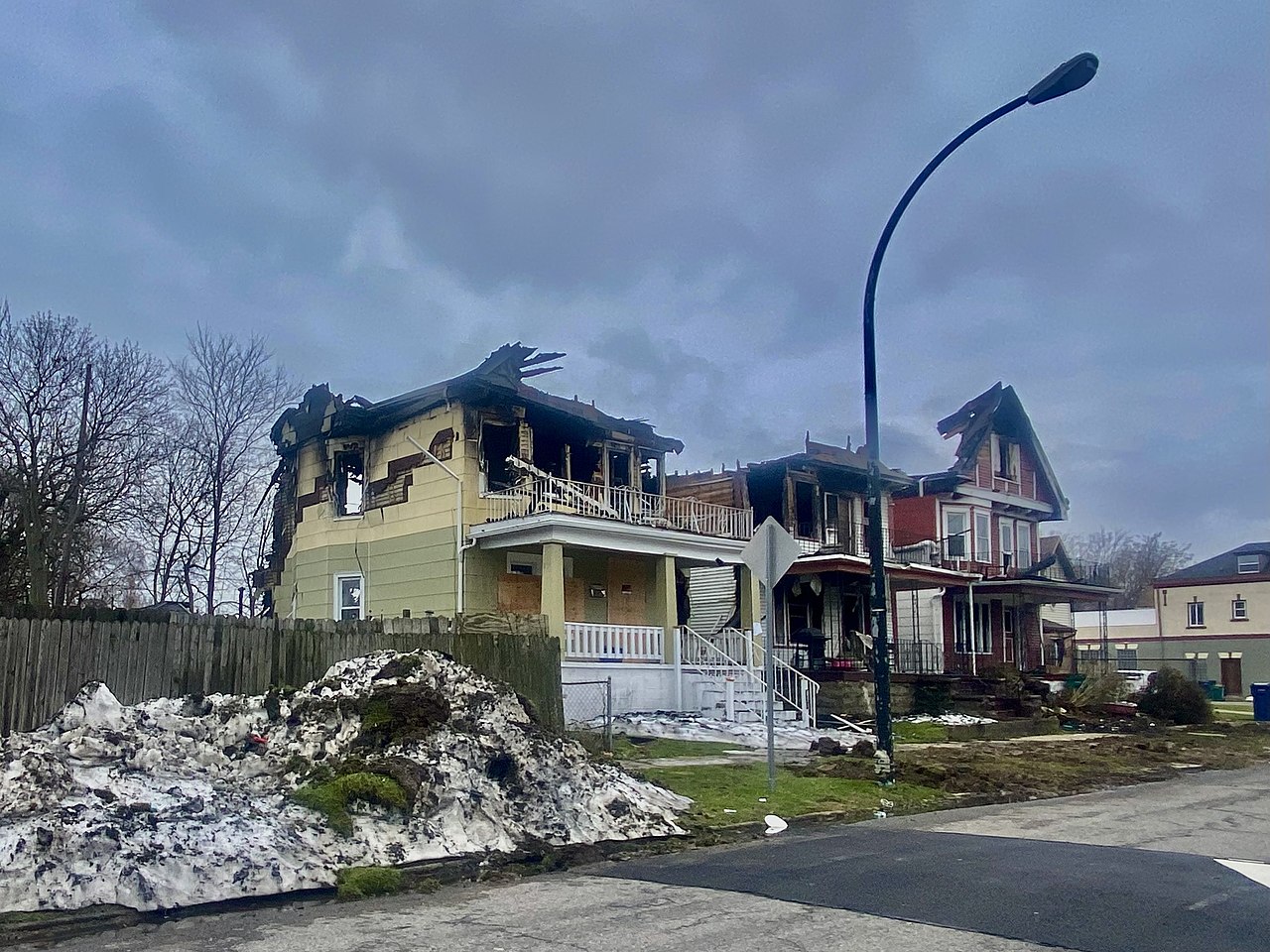
Recovery after a fire is not a to do list. It is a sequence of gates, and each one opens only when the step in front of it is finished.
The order of operations after a house fire matters more than speed. Doing the right thing at the wrong time is the most expensive mistake homeowners make.
Most of the money people lose is not lost in the fire itself. It is lost by cleaning, tossing, signing, or rebuilding early.
This page maps the whole thing, from the night of the fire itself to the day you move back in, with the do not do this before that rule attached to every phase.
What is the correct order of operations after a house fire?
Here are the seven phases in order. Almost every recovery, from a scorched kitchen to a total loss, moves through them in this sequence.
- Safety and the first night. People and pets checked, the structure cleared by the fire department, somewhere to sleep.
- Open the claim. Report the loss, get a claim number, ask for an emergency advance and living expenses.
- Secure and mitigate. Board up, tarp the roof, extract water, start drying, stop the loss from growing.
- Document and inventory. Photos, video, a room by room contents list, then the adjuster inspection.
- Agree the scope. A written scope of work, estimates compared, contract and payment terms settled.
- Clean and rebuild. Drying, soot removal, deodorizing, then reconstruction and inspections.
- Verify and return. Clearance testing, punch list, final payment, move back in.
In real life the early phases overlap. Mitigation and documentation usually run side by side, and that is fine, because neither one is permanent repair.
What must not overlap is anything you cannot undo. Cleaning, discarding, demolition, and rebuilding all sit behind the documentation gate.
The first two phases have their own page. If you are still inside the first 48 hours, work through the first steps after a house fire before you read further.
Which gates in the order of operations after a house fire cannot be skipped?
These are the gates. Each is a rule shaped the same way: do not start this until that is finished.
- Do not clean or throw anything out until your own photos and inventory exist and the adjuster has inspected.
- Do not sign a full repair contract or a direction to pay until the scope of work is written and the insurer has agreed to it.
- Do not start reconstruction until mitigation is complete and the cause and origin investigation has released the scene.
- Do not buy replacement appliances or furniture until those exact items sit on a priced contents inventory.
- Do not cancel the policy or close utility accounts while the house is still being rebuilt.
- Do not move back in until the air, surfaces, and odor have been verified rather than eyeballed.
Every one of those has a real price attached. The rest of this page explains what each gate is protecting and what it costs to jump it.
Why can't you clean or throw anything out before the adjuster sees it?
Your claim pays on documented loss. An item already in a dumpster is an item you are arguing about from memory.
State regulators say this plainly. Minnesota's consumer guidance tells homeowners not to discard damaged property until the adjuster authorizes it.
Cleaning counts too. Wiping soot off a hallway before the inspection erases the evidence of how far the smoke actually travelled through the house.
There is a second reason, and it is larger. If a product or a contractor caused the fire, your insurer may want to recover the money from them.
That recovery is called subrogation, and it depends on the scene surviving intact. Moving or binning evidence early can end that case and complicate yours.
So the order is fixed. Photograph everything, video every room including the ones that only smell, build the inventory, let the adjuster inspect, then clean.
Even after that, keep a sample of each material. A swatch of carpet, a piece of drywall, a burned outlet cover, held until the claim closes.
If the house is still open to the weather or holding firefighting water, mitigation is the one thing that should not wait on a claim decision.
(844) 810-6096When should you sign a restoration contract or a direction to pay?
There are two very different documents here, and people sign them on the same afternoon without noticing the difference.
The first is a narrow emergency work authorization covering board up, tarping, and water extraction. Signing that on day one is normal and usually sensible.
The second is the full restoration contract, often stapled to a direction to pay. That one waits for a written scope the insurer has agreed to.
A direction to pay routes your claim money straight to the contractor. Signing it before the scope is priced hands over the only leverage you have.
California's insurance department is direct about the timing. Do not rush into agreements with contractors, attorneys, or public adjusters, and verify every license first.
Get the scope in writing, put a second estimate beside it, then sign. Choosing a fire damage restoration company improves enormously with two days of patience.
Watch the wording as well. A contract with no dollar figure, only the phrase whatever insurance pays, is not a price. It is a blank check.
Why does reconstruction have to wait for mitigation and the investigation?
Reconstruction sits last for a physical reason. You cannot build over wet, sooty, or smelly material and expect the problem to stay buried.
Drying precedes cleaning, cleaning precedes deodorizing, deodorizing precedes paint. That internal order is mapped in the fire damage restoration process.
There is a legal gate too. While the cause is under investigation, the scene has to be preserved until every interested party has inspected it.
That can take weeks when evidence goes to a state lab or several investigators must be scheduled. Demolition before release is a classic way to sink a claim.
Money has its own gate. With a mortgage, the settlement check usually names the lender alongside you, and the lender releases funds in stages.
A common pattern is roughly a third up front, a third near the midpoint, and the balance at completion, each release triggered by an inspection.
That is exactly why paying a contractor in full up front is dangerous. The money arrives in installments, so your payment schedule has to match.
When should you replace appliances, clothes, and furniture?
The urge to buy a new washing machine in week one is strong. Hold off until that machine is on the inventory and priced.
Most policies pay contents at actual cash value first, then release the remainder once you genuinely replace the item and send in the receipt.
That holdback is the whole point. Replacing before the list exists leaves you with a receipt for something new and no proof of what was lost.
Run it in this order. List the item with brand, age, and original cost, get it priced on the claim, buy the replacement, submit the receipt.
Keep every receipt regardless. Undocumented spending is painful to reimburse, whether it is a mattress or three weeks of restaurant meals.
If the structure itself is in doubt, the contents order changes completely. Settle whether your house is a total loss before planning around a rebuild.
What deadlines run in the background of the order of operations after a house fire?
While you work the phases, clocks are running behind them. They do not pause because you are exhausted or living in a hotel.
Notice comes first. Policies require prompt notice of a loss, which is why the claim call belongs in phase two rather than after the cleanup.
Then comes the sworn proof of loss. Many policies allow 60 days from the insurer's demand, and some states extend that after a declared emergency.
Ask in writing for an extension if the inventory is not ready. Extensions are commonly granted, missed deadlines almost never are.
Replacement cost has its own window. Insurers typically give a fixed period, often one to two years, to replace items and claim the held back difference.
Living expenses are capped by dollars or months, not by need. California requires at least 24 months of catastrophe living expenses, with extensions for delays outside your control.
Keep a claim diary from day one. Date, name, what was said, what was promised. Regulators recommend it because memory is not evidence.
Not sure which phase you are actually in, or what has to finish before the next one starts? A short conversation can put the sequence back in order.
(844) 810-6096What should you never cancel or shut off too early?
Two cancellations do real damage, and both feel completely reasonable at the time.
The first is the homeowners policy. A burned house still needs liability cover, and the rebuild plus your replacement belongings need cover as they arrive.
Reduce the coverage if the premium hurts, but do not drop it mid rebuild. A coverage gap during reconstruction is very hard to fill afterwards.
The second is utilities. Shutting off gas, water, and power at the meter for safety is correct. Closing the accounts entirely is not.
Drying equipment, air scrubbers, and every trade on site need power at the property. Reconnecting a closed account can take weeks you do not have.
Same logic for the address. Forward the mail, do not abandon it, because claim documents and checks still get posted to the burned house.
When is it safe to move back in and close the claim?
This is the gate people push hardest. Everything looks finished, the smell is faint, and everyone is sick of the hotel.
Looking clean is not the standard. Independent verification, air and surface sampling by someone with no financial stake in the job, is.
Time alone does not settle it either. Some combustion residues fade within weeks, while others stay in dust and porous materials for months.
Get the clearance report in writing before the furniture comes back. It doubles as documentation for closing out the claim cleanly.
Then run the ordinary construction closeout. Punch list, permits signed off, lien waivers from subcontractors, final draw released by the lender.
If anything still nags at you about the air or the structure, read whether it is safe to live in your house after a fire before you set a move back date.
You will not run this sequence perfectly, and you do not have to. Just keep every irreversible action behind its gate.
Document before you clean. Agree the scope before you sign. Finish mitigation before you rebuild. Verify before you return.
Common questions
What is the correct order of operations after a house fire?
Seven phases in sequence: safety and the first night, open the insurance claim, secure and mitigate the property, document and inventory everything, agree a written scope of work, clean and then rebuild, and finally verify the house before moving back in. Anything irreversible waits until the documentation phase is finished.
What is the most expensive thing to do out of order after a fire?
Throwing away or cleaning damaged property before the adjuster has inspected it. Your claim pays on documented loss, so a discarded item becomes an argument from memory. It can also destroy evidence the insurer needed to recover money from whoever or whatever caused the fire.
Can I sign anything with a restoration company on day one?
Yes, but only a narrow emergency work authorization for board up, tarping, and water extraction. Hold off on the full restoration contract and any direction to pay until a written scope of work exists and the insurer has agreed to it. A direction to pay sends your claim money straight to the contractor.
How long do I have to file a proof of loss after a fire?
Many policies allow 60 days from the insurer's demand for a sworn proof of loss, though state rules vary and several states extend the deadline after a declared emergency. If your contents inventory is not finished, request an extension in writing. Extensions are commonly granted, missed deadlines rarely are.
Should I cancel my homeowners insurance or utilities after a fire?
No. Keep the policy in force through the rebuild for liability and for the belongings you replace along the way. Shut gas, water, and power off at the meter for safety, but do not close the utility accounts, because drying equipment and every trade on site need power at the property.
When can I move back in after a fire?
After independent verification, not after it looks clean. Air and surface sampling from a party with no stake in the restoration work confirms combustion residues are down to acceptable levels. Get that clearance in writing, finish the punch list and lien waivers, then schedule the move.
Sources
- Fire Loss in the United States During 2024 — National Fire Protection Association (NFPA)
- Facts + Statistics: Homeowners and Renters Insurance — Insurance Information Institute (Triple-I)
- Residential Insurance Claims: Filing a Claim and Consumer Warnings — Minnesota Department of Commerce
- After the Fire: Returning to Normal — U.S. Fire Administration (USFA), FEMA
- Top Ten Tips for Wildfire Claimants — California Department of Insurance
- Recovering After a Home Fire — American Red Cross
- ANSI/IICRC S700 Standard for Professional Fire and Smoke Damage Restoration — Institute of Inspection, Cleaning and Restoration Certification (IICRC)
- Getting Your Mortgage Company to Release Insurance Proceeds — United Policyholders
- Post-Remediation Verification and Clearance Testing After Fire Damage — Partner Engineering and Science
 Emergency & First ResponseWhat to Do First After a House Fire, Step by Step
 The Restoration ProcessThe Fire Damage Restoration Process, Step by Step
 The Restoration ProcessHow Long Does Fire Damage Restoration Take?
 Insurance & ClaimsDoes Homeowners Insurance Cover Fire Damage?
 Insurance & ClaimsFire Damage Claim Denied? Here Is How to Fight Back
 Assessment & SeverityIs My House a Total Loss After a Fire?